Yves Zimmermann · 10 October 2026
Indigenous Knowledge Systems Reveal How Climate Variations Influence Jackdaw Wintering Grounds
Jackdaws have long relied on consistent wintering grounds across Europe and parts of Asia, yet climate variations now reshape those patterns in measurable ways, and indigenous knowledge systems from communities with centuries of observation provide key context for these shifts. Researchers have documented how groups in northern regions track subtle changes in temperature, snowfall, and food availability that signal when jackdaw flocks adjust their routes or settle in new areas. Data from multiple studies show that warmer autumn temperatures correlate with delayed southward movements, while prolonged mild spells allow some populations to remain farther north than historical records indicate.
Traditional Observations Meet Modern Records
Communities that have monitored corvid movements for generations note specific indicators, such as the timing of jackdaw calls at dusk or the density of flocks near certain river valleys, and these cues align with satellite tracking data collected over the past two decades. One study compiled oral histories from Sami and other northern European groups alongside meteorological records, revealing that jackdaws now overwinter in locations that previously saw only transient visits during harsh winters. Figures from the European Environment Agency indicate average winter temperatures have risen by 1.5 degrees Celsius since the mid-20th century in key flyway regions, and this warming corresponds with documented expansions of jackdaw ranges into previously marginal habitats.
Indigenous accounts also describe how changes in berry crops and insect hatches influence where birds choose to settle, details that complement scientific measurements of vegetation phenology. Observers in these communities report that jackdaws increasingly exploit urban edges during milder seasons because reduced snow cover leaves more foraging opportunities on open ground. Such patterns emerge clearly when traditional seasonal calendars are compared with ringing data from bird observatories across the continent.
Climate Drivers and Range Adjustments
Climate variations affect jackdaw wintering grounds through several interconnected mechanisms, including altered precipitation regimes and shifting predator distributions. Researchers tracking tagged birds have recorded individuals remaining at higher latitudes during winters with fewer than 20 days of sub-zero temperatures, a threshold that occurred more frequently before 2000. Indigenous knowledge holders point to the same threshold using natural signs like the first hard frost or the behavior of associated species such as magpies and rooks. These combined datasets show that the core winter range has shifted northward by an average of 45 kilometers over the last 30 years in parts of Scandinavia and the Baltic region.
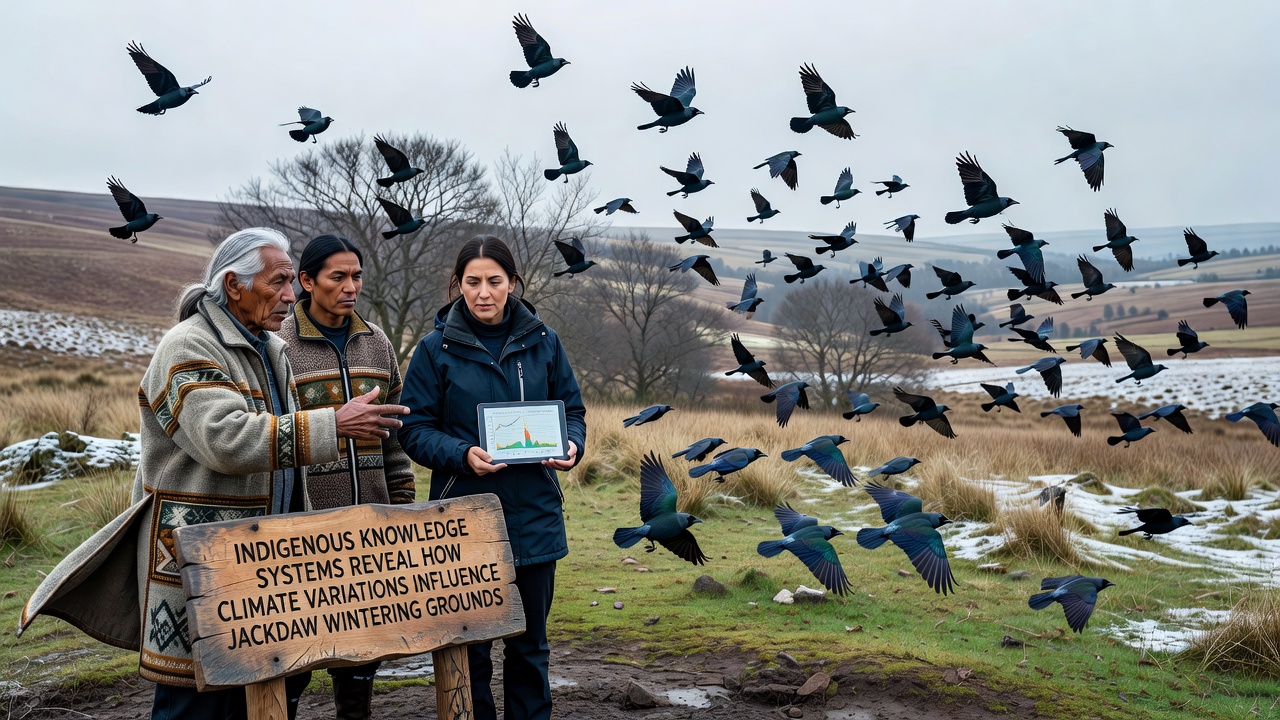
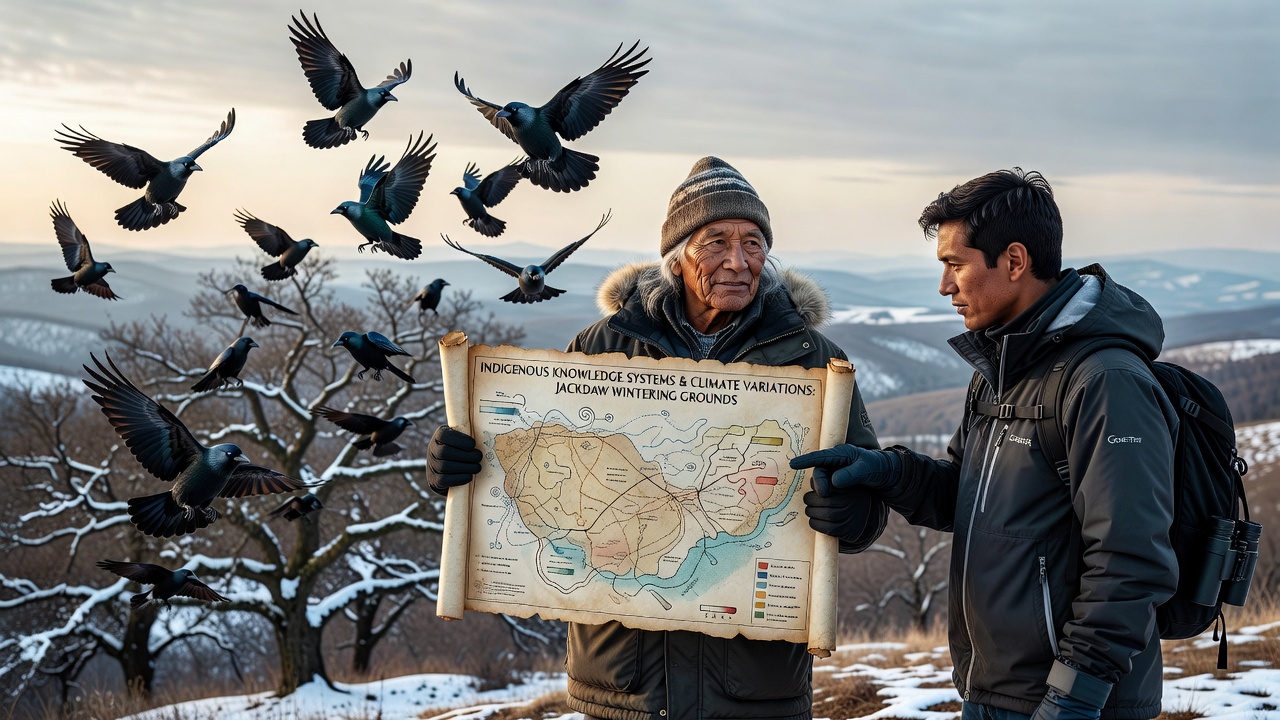
Additional evidence comes from long-term monitoring programs that integrate community reports with climate models. In October 2026, ongoing collaborations between indigenous observers and ornithological teams are expected to release updated maps that incorporate both satellite imagery and generational knowledge of microclimate effects on roost selection. These efforts highlight how reduced ice formation on lakes alters waterbird competition, indirectly benefiting jackdaws that scavenge in the same areas. Reports from the Arctic Council working groups further note that changing wind patterns during migration windows influence arrival dates at winter sites, a factor long recognized in traditional navigation practices.
Integration of Knowledge Systems
Scientists increasingly pair indigenous indicators with quantitative modeling to forecast future winter distributions under continued warming scenarios. For instance, elders in certain regions have identified specific plant species whose leaf retention signals favorable conditions for jackdaw groups, and these phenological markers now feed into predictive algorithms used by conservation agencies. Data compiled by BirdLife International demonstrates that areas where indigenous monitoring occurs show higher accuracy in predicting local abundance changes compared with purely remote-sensing approaches. The approach yields practical outcomes, such as adjusted timing for habitat protection measures that account for earlier or later flock arrivals.
Case examples include communities in the Carpathian foothills who have maintained records of jackdaw presence tied to specific lunar cycles and temperature thresholds, records that match recent GPS tracking results showing increased residency near human settlements during milder periods. Researchers note that these overlaps strengthen the reliability of projections for the 2030s, when models anticipate further contraction of traditional southern winter grounds.
Conclusion
Indigenous knowledge systems continue to supply granular, place-based insights that refine understanding of how climate variations steer jackdaw wintering decisions. When combined with contemporary monitoring, these systems produce clearer pictures of range adjustments already underway and those projected for coming decades. The resulting datasets support more precise conservation planning while preserving the depth of observation accumulated over generations.