Alex Hoffmann · 24 October 2026
Colony Mapping Efforts Reveal Unexpected Links Between Rook Hierarchies and Disease Spread in Flocks
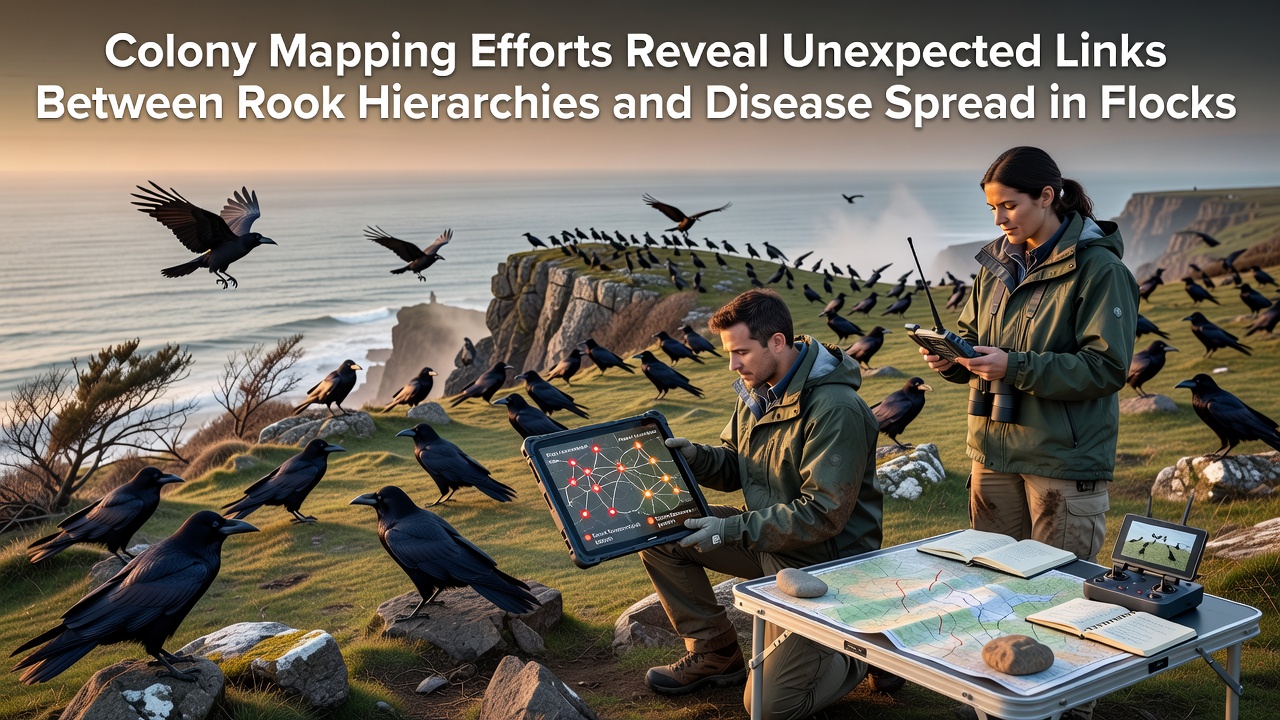
Researchers tracking rook colonies through detailed mapping projects have identified connections between social hierarchies and the transmission patterns of avian diseases in these large corvid groups, and data collected over multiple breeding seasons shows that dominant individuals often occupy central positions within nesting areas while subordinates remain on the edges. These positioning differences appear to influence how pathogens move through the flock because central birds interact more frequently during feeding and preening sessions according to studies conducted by teams in several European countries.
Mapping Techniques and Data Collection
Teams employ a combination of GPS transmitters, drone surveys, and ground observations to chart colony layouts and individual movements, while satellite imagery helps identify new rookeries forming in agricultural regions where food sources remain abundant. In October 2026 researchers released updated colony maps covering sites in France, Germany, and the Netherlands that revealed consistent patterns in dominance structures across different populations, and these maps allowed scientists to overlay disease incidence data collected from fecal samples and blood tests.
One study tracked over 200 marked rooks and found that birds holding higher rank within the hierarchy experienced lower rates of certain respiratory infections yet showed higher exposure to parasites spread through close contact, whereas lower-ranking individuals avoided some direct transmissions but suffered more from environmental contaminants accumulated in peripheral zones. Observers note that such findings emerged because mapping efforts captured both spatial arrangements and social interactions simultaneously rather than treating them as separate factors.
Hierarchy Structures and Pathogen Dynamics
Rook hierarchies form through repeated agonistic encounters at communal roosts and feeding sites, and dominant pairs secure prime nesting spots near the colony core where they maintain stronger bonds with neighbors. This central placement increases opportunities for allopreening and food sharing, behaviors that researchers have linked to faster spread of viruses such as avian pox in some colonies. Data from blood assays indicate that dominant birds carry antibodies to multiple strains yet rarely develop severe symptoms, suggesting their position confers both exposure and potential resilience through better nutrition.

Subordinate rooks, positioned farther out, interact less with the core group but forage in more varied habitats that expose them to different pathogen reservoirs, and colony maps show these outer birds often travel longer distances daily which can introduce novel strains back into the main group during breeding. Experts at the BirdLife International network have documented similar edge effects in other corvid species, while reports from the Australian National University highlight parallel dynamics in related taxa where social rank correlates with parasite loads.
Broader Implications for Flock Health
Colony mapping has also revealed seasonal shifts in hierarchy stability, particularly during post-fledging periods when juveniles challenge established ranks and create new interaction networks that can accelerate disease circulation. Researchers discovered that colonies with more fluid dominance structures experienced slower overall pathogen spread compared to those with rigid hierarchies, because frequent rank changes disrupt consistent contact patterns. Figures from long-term monitoring programs show infection peaks aligning with periods of high nest density rather than absolute population size alone.
Additional mapping work in North American crow populations, though focused on different species, provides comparative data through the Cornell Lab of Ornithology databases, and these records help clarify how hierarchy-disease links vary across geographic ranges. The combined datasets underscore the value of integrating social mapping with epidemiological tracking to predict outbreak risks in corvid communities.
Conclusion
Colony mapping continues to uncover layered relationships between social organization and health outcomes in rook flocks, and ongoing projects aim to refine predictive models that incorporate both hierarchy data and environmental variables. Such integrated approaches offer clearer pictures of transmission routes without relying on assumptions about uniform flock behavior.