Harper Schmidt · 12 September 2026
Aviary Studies Quantify How Corvids Respond Innovatively to Novel Objects
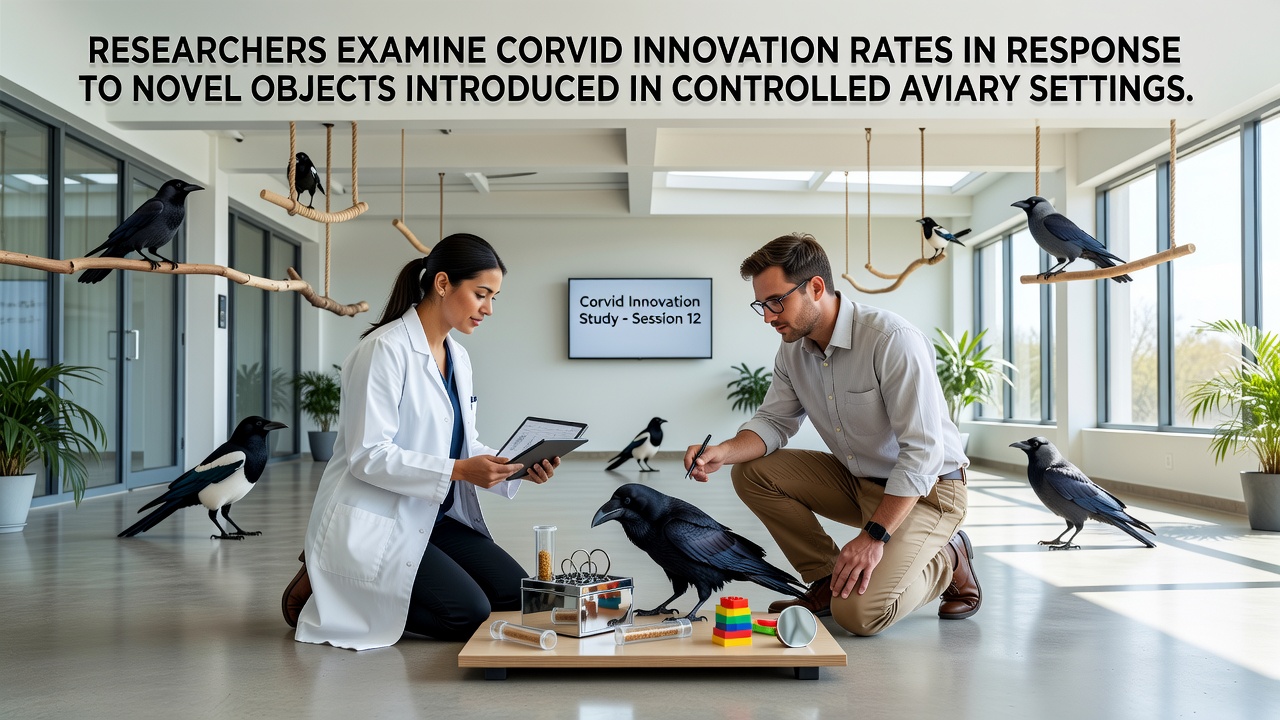
Researchers conduct controlled experiments in aviary settings to measure innovation rates among corvids when they encounter unfamiliar objects, and these trials produce data on problem-solving behaviors across multiple species including crows, ravens, and magpies. Studies track metrics such as latency to first contact, manipulation duration, and successful extraction of rewards hidden within or beneath the items, while researchers maintain standardized conditions that isolate variables like object complexity and prior exposure history.
Experimental Design in Aviary Environments
Teams set up aviaries with consistent dimensions, lighting, and perching structures so that each subject experiences identical baseline conditions before any novel item appears, and they introduce objects such as puzzle boxes, colored tubes, or mechanical levers at scheduled intervals to record precise response sequences. Data collection relies on video analysis that logs every peck, pull, or probe, which allows observers to calculate innovation scores based on the number of distinct actions performed within defined time windows, while control trials without objects establish baseline activity levels for comparison.
Multiple research groups coordinate protocols that include habituation phases lasting several days, followed by test sessions where each corvid receives one new object per day over a two-week period, and results indicate that younger birds often show shorter latencies to approach while adults demonstrate more varied manipulation sequences. Researchers record environmental factors including temperature and time of day because these variables correlate with activity patterns in earlier field observations, and they adjust statistical models accordingly to separate individual differences from situational influences.
Data Patterns Across Species and Age Groups
Findings from repeated trials reveal that certain corvid species generate higher rates of novel action combinations when presented with multi-component objects, whereas others focus on single dominant strategies until those fail, and longitudinal tracking shows that individuals repeat successful techniques more frequently in subsequent tests. One study published in 2025 documented that magpies achieved reward retrieval in 68 percent of trials involving lever-based devices after an average of 14 minutes, while crows required 22 minutes on average yet performed a broader range of exploratory behaviors before success.
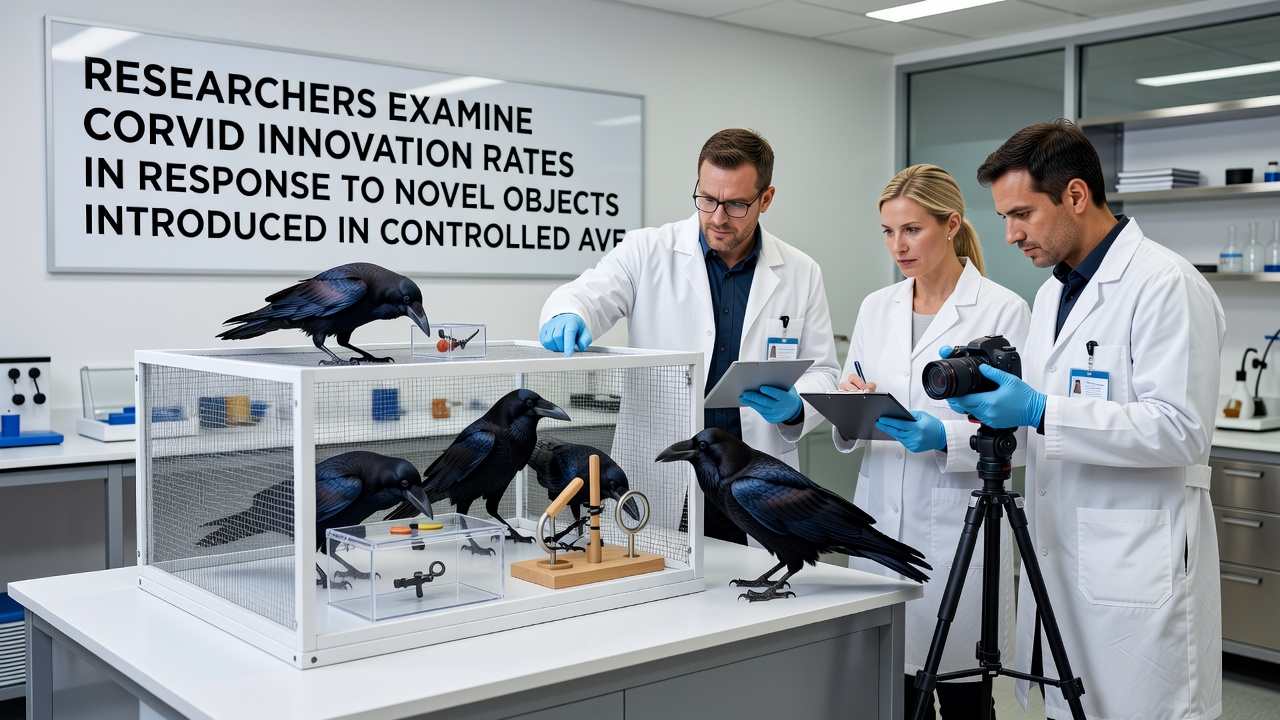
September 2026 marks the scheduled release of a multi-site dataset that compiles results from facilities in North America, Europe, and Australia, allowing analysts to compare innovation metrics across geographically distinct populations under matched protocols. The project draws on standardized object sets distributed to each participating laboratory, and preliminary summaries indicate consistent age-related declines in approach speed alongside stable or increasing diversity of manipulation tactics among older subjects.
Integration with Broader Cognitive Research
These aviary experiments connect directly to ongoing work on corvid memory, social learning, and causal reasoning because the same individuals often participate in parallel tests that measure performance across domains, and researchers cross-reference innovation scores with results from delayed gratification tasks or tool-use assessments. A report from the National Science Foundation highlights funding allocations that support such integrated studies, noting that combined datasets strengthen inferences about general cognitive flexibility. Another analysis coordinated through European research networks examines whether prior experience with one type of novel object transfers to improved performance on unrelated items introduced later in the sequence.
Observers note that video archives from these trials serve as training material for machine-learning models designed to automate behavior classification, which reduces manual coding time while maintaining inter-observer reliability above 90 percent when validated against human scorers. Facilities also share protocols through open repositories so that new teams can replicate core procedures with minimal variation, and this standardization supports larger sample sizes across species that differ in body size and natural history.
Conclusion
Controlled aviary research continues to supply quantifiable measures of corvid innovation that complement field observations and advance understanding of how these birds adapt to changing environments through flexible behavior. Ongoing data collection scheduled through 2026 and beyond will expand comparative datasets, refine measurement techniques, and clarify the factors that shape individual and species-level differences in response to novelty.